
Marangu in 5 days

Marangu in 5 days

Marangu route which is also known as the coca cola route is the least expensive route to the summit. This is also the only route with the comforts of sleeping huts at every camp site with solar lights and comfortable beds.

The huts are communal, and the bunks have a sponge mattress and pillow.

There are 60 beds at both Mandara and Kibo Huts and 120 beds at Horombo Hut. Bathrooms and running water are available at the two lower huts. Mens’ and ladies’ latrines are available at the last camp but are very basic.

All climbing groups, often from several countries around the world, share meals in dining huts providing a jovial and energetic atmosphere.

This route is usually done in 5 days (shortest route to the summit) but can be done in 6 days for better acclimatization. The extra day can be spent resting at Horombo or climbing the small peak of Mawenzi.

Trekking Highlights

Day 0: Pre-trek Briefing

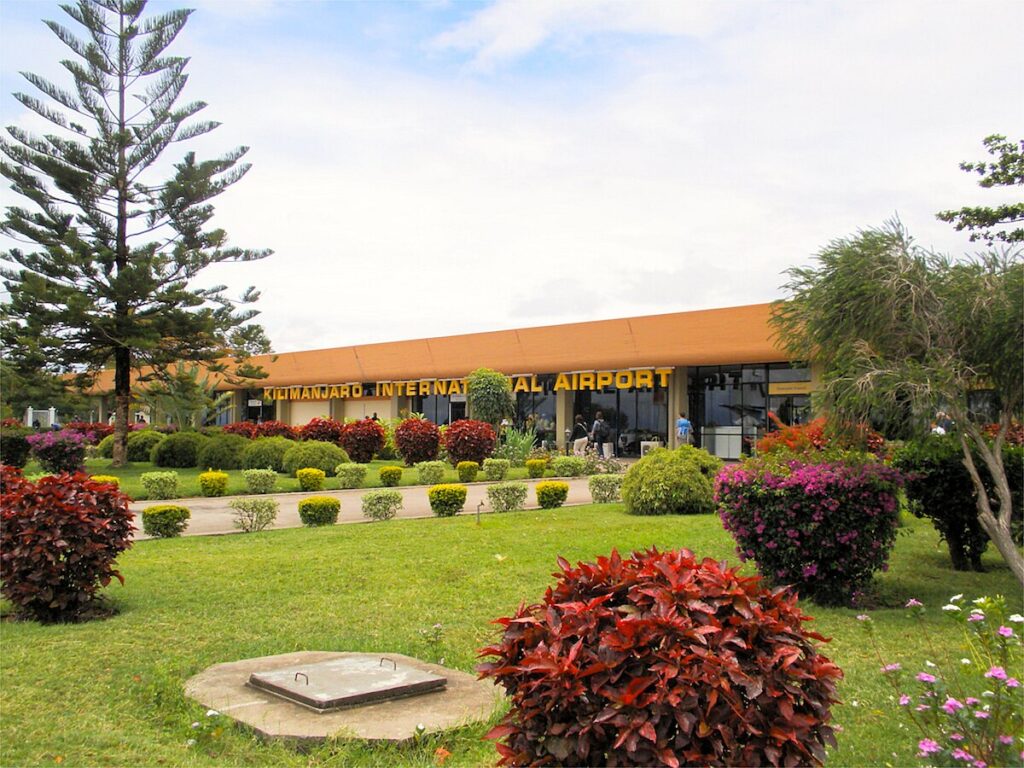
If you have opted for the optional airport transfers, we will pick you up from Kilimanjaro Airport or Arusha airport and transfer you to your hotel in Moshi.

Pre-trek briefing at your Moshi hotel. You should be planning to arrive atleast one day before the start of the trek. Today we will spend in having a pre-trek briefing. We will also review your equipment and rent any equipment which is needed.

Day 1: Hotel to Mandara Hut

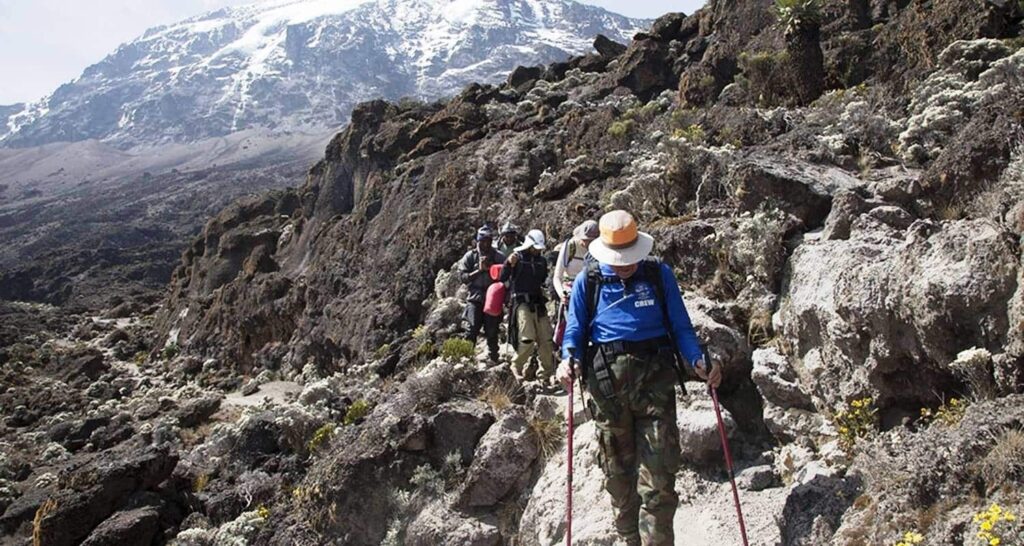
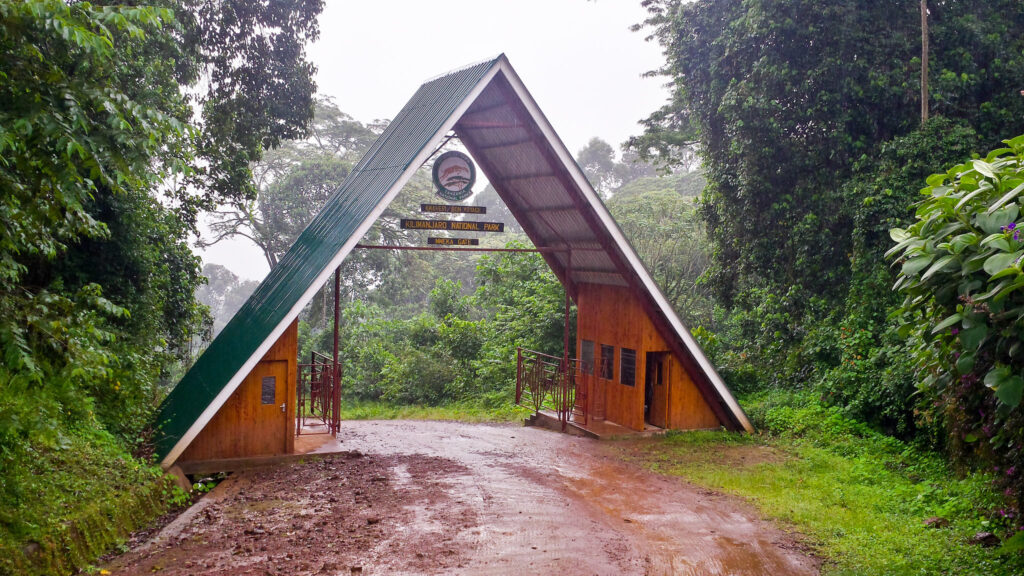
After breakfast and briefing, drive to the Kilimanjaro National Park Gate (about 1 hour), register and commence the climb. Walk through the rainforest to the Mandara encampment. A side trip to Maundi Crater is a good way to see the surroundings including Northern Tanzania and Kenya. In the rainforest, look for towering Eucalyptus trees, bird life, and Colobus monkeys.

Elevation: 1860m/6100ft to 2700m/8875ft
Distance: 8km/5mi
Hiking Time: 3-4 hours
Habitat: Montane Forest
Meals: Lunch and Dinner

Day 2: Mandara Hut to Horombo Hut

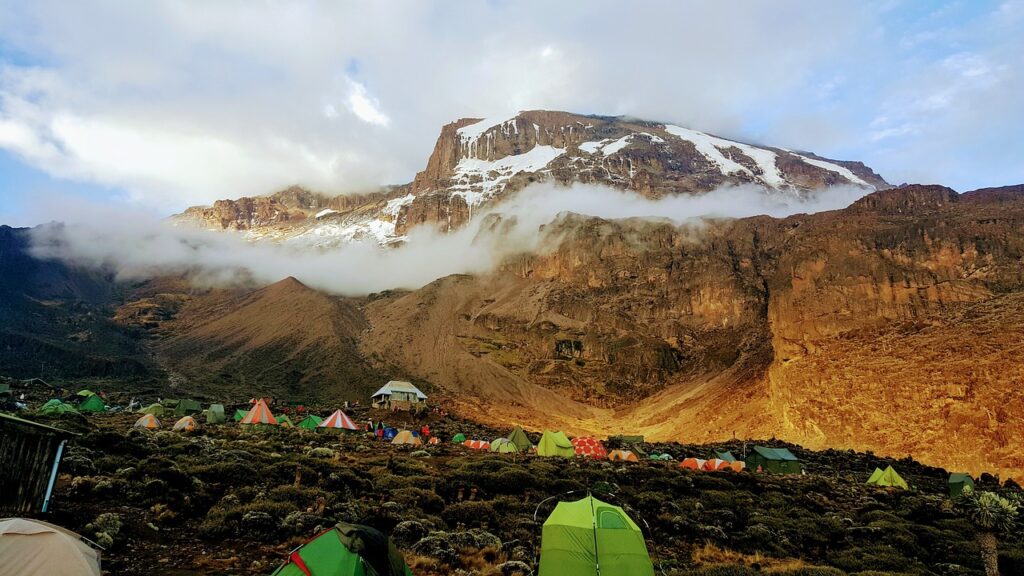
You leave the glades of the rain-forest and follow an ascending path on the open moorlands to the Horombo encampment. Views of Mawenzi and the summit of Kibo are amazing. Look for giant lobelias and grounsels. You may begin to feel the affects of the altitude.

Elevation: 2700m/8875ft to 3700m/12,200ft
Distance: 12km/7.5mi
Hiking Time: 5-6 hours
Habitat: Heathland
Meals: Breakfast, Lunch and Dinner

Day 3: Horombo Hut to Kibo Hut

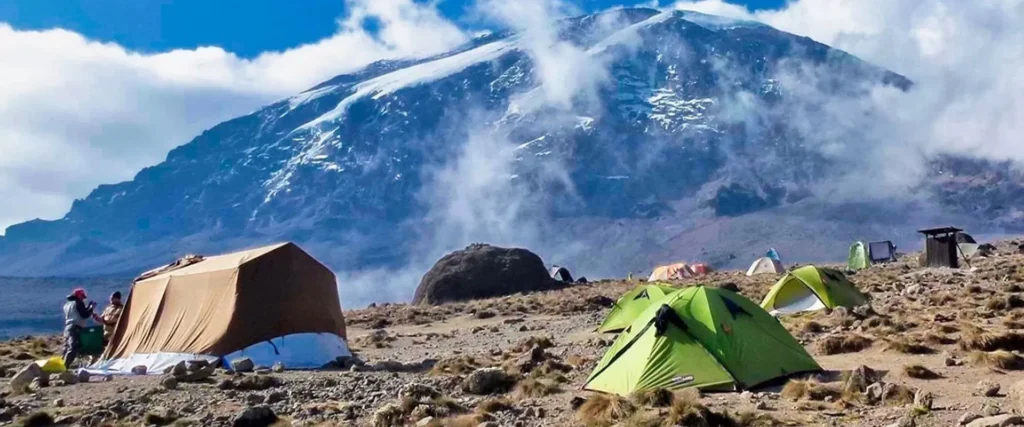
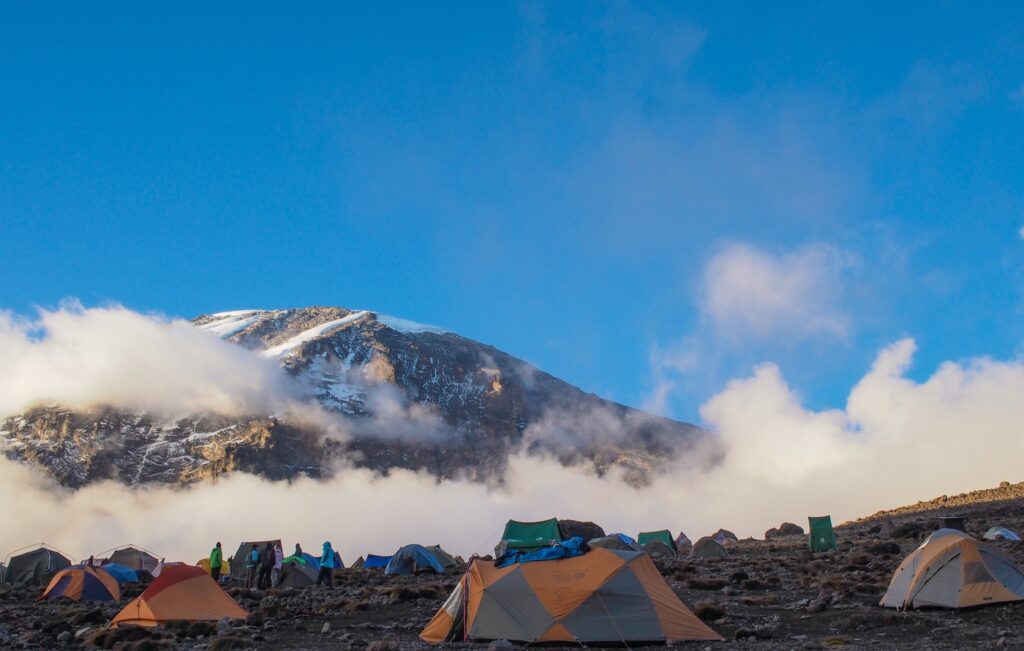
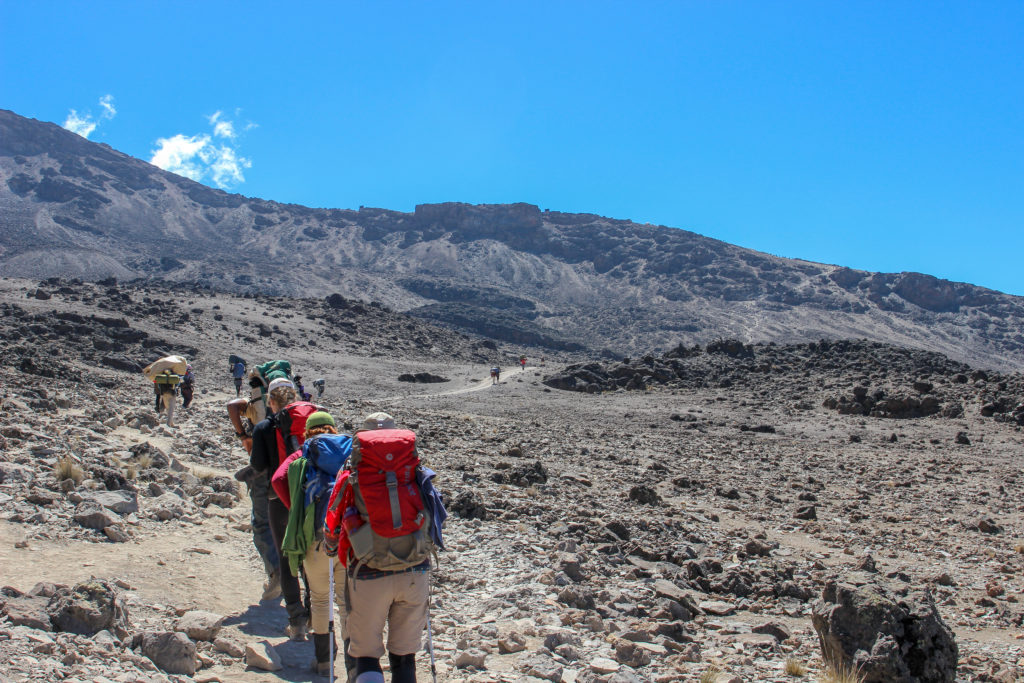
Ascending, we now pass the last watering point, walking onto the saddle of Kilimanjaro between the peaks of Kibo and Mawenzi. Vegetation begins with upper heathland but then disappears into “moonscape”. Dinner, rest, and prepare for summit climb.

Elevation: 3700m/12,200ft to 4700m/15,500ft
Distance: 9km/5.5mi
Hiking Time: 5-6 hours
Habitat: Alpine Desert
Meals: Breakfast, Lunch and Dinner

Day 4: Kibo Hut to Summit to Horombo Hut

Very early in the morning (midnight to 2 am), commence the climb to the summit on steep and heavy scree or snow up to Gilman’s point located on the crater rim. Continuing, we now ascend to Uhuru Peak, which is the highest point in Africa. There are unbelievable views at every turn. Have your picture taken at the summit to show your friends and family. From here we descend, stopping for lunch and a rest at Kibo before continuing on to the Horombo encampment.

Elevation: 4700m/15,500ft to 5895m/19,340ft
Down to 3700m/12,200ft
Distance: 6km/4mi up / 15km/9mi down
Hiking Time: 6-8 hours up / 6-8 hours down
Habitat: Alpine Desert
Meals: Breakfast, Lunch and Dinner

Day 5: Horombo Hut to Moshi

After breakfast, a steady descent takes us down through moorland to the Mandara Hut. Continue descending through lush forest path to the National Park gate at Marangu. At lower elevations, it can be wet and muddy. Gaiters and trekking poles will help. Shorts and t-shirts will probably be plenty to wear (keep rain gear and warmer clothing handy).

A vehicle will be waiting for you at Marangu gate to drive you back to your hotel in Moshi (about 1 hour).

Elevation: 3700m/12,200ft to 1700m/5500ft
Distance: 20km/12.5mi
Hiking Time: 4-5 hours
Habitat: Forest
Meals: Breakfast

  • All transfers to the mountain and back to your Moshi hotel

  • Emergency Oxygen Cylinder
  • Quality Mess tents with table and chairs

  • Large portions of fresh, healthy, nutritious food

  • Kilimanjaro summit certificate

  • Quality, waterproof, four-season mountain sleeping tents (on twin sharing basis)

  • Camping or Hut fees (part of park fees)

  • Professional, experienced, mountain guides

  • Clean, purified drinking water

  • Conservation fees (part of park fees)

  • Rescue fees (part of park fees)

  • All meals while on the Mountain

  • Sleeping Mattress

  • Guides, Porters, Cook salaries and park fees

  • VAT (18% charged by the Government)

  • International and domestic flights

  • Tips and gratuities

  • Meals not listed in the itinerary

  • Personal Expenses (e.g. laundry, telephone, beverages, etc.)

  • Surcharge for online payment of advance and balance (5% on each payment)

  • Transfers (available as an optional addon)

  • Travel insurance

  • Tanzania Visa

  • Personal trekking equipment such as sleepings bags, hiking boots, clothes, etc (available for renting)

  • Hotel (available as an optional addon)

  • Liquors, beers and bottled beverages

Let Us Create Your Perfect Safari Adventure!

We’re thrilled to assist in designing your perfect safari experience! Kindly share your vision and preferences with us, and we’ll turn your dream adventure into reality.

5-Day Marangu Route: Day-by-Day Itinerary & Trekking Guide

Marangu is usually described as Kilimanjaro’s hut-based route. The hut accommodation distinguishes it from camping routes, but it does not remove the altitude challenge.

Route choice: what changes from one itinerary to another?

Five- and six-day Marangu itineraries differ in acclimatisation opportunities. A traveller should compare the actual overnight stops and recovery time rather than choosing solely by advertised cost.

Route descriptions should separate the number of trekking days from pre-climb hotel nights and onward travel. A two-day difference in an advertised itinerary may change where the overnight stops fall and how much time the group has, not simply add leisure days. The final camp schedule must be confirmed in the official trip documents.

Compare day-by-day stages, accommodation and support

The current published content includes the following stage headings. These are a guide to the page as provided, not a promise that operational schedules can never change.

  • Day 0: Pre-trek Briefing
  • Day 1: Hotel to Mandara Hut
  • Day 2: Mandara Hut to Horombo Hut
  • Day 3: Horombo Hut to Kibo Hut
  • Day 4: Kibo Hut to Summit to Horombo Hut
  • Day 5: Horombo Hut to Moshi

Inclusions, exclusions and booking questions

Ask about sleeping arrangements, meals, the number of days on the mountain and what support is available if the planned schedule must change.

  • Exact route dates, number of mountain days and any hotel nights.
  • Park permissions, guiding arrangements, crew support and emergency procedures.
  • Meals, sleeping arrangements, personal gear and any hired equipment.
  • Airport and local transfers, tips, insurance and extra accommodation.
  • Payment terms and procedures if weather or safety requires a change.

Weather, altitude and responsible trip planning

High-altitude travel carries risks which depend on individual circumstances and conditions on the mountain. Tour descriptions should not promise a summit or imply that experience eliminates altitude concerns. Prospective travellers should discuss their health and suitability with qualified professionals, and providers should clearly explain their licensed guiding and emergency arrangements.

Questions travellers often miss

Ask whether the advertised duration counts the arrival day, which accommodation is used before and after the trek, what happens if an operational change becomes necessary, and which parts of the quote are not refundable. A transparent answer to these details is more useful than a percentage-based success claim without verifiable records.

Marangu is usually described as Kilimanjaro’s hut-based route. The hut accommodation distinguishes it from camping routes, but it does not remove the altitude challenge.

How the marangu in 5 days itinerary differs from other climbing options

Five- and six-day Marangu itineraries differ in acclimatisation opportunities. A traveller should compare the actual overnight stops and recovery time rather than choosing solely by advertised cost.

Published day-by-day stages to compare with your booking confirmation

The stages below follow the headings in this published itinerary. Check every camp and transfer with the operator before travelling, because route variants and operational changes are possible.

  • Day 0: Pre-trek Briefing
  • Day 1: Hotel to Mandara Hut
  • Day 2: Mandara Hut to Horombo Hut
  • Day 3: Horombo Hut to Kibo Hut
  • Day 4: Kibo Hut to Summit to Horombo Hut
  • Day 5: Horombo Hut to Moshi

Comparing the price and inclusions

Ask about sleeping arrangements, meals, the number of days on the mountain and what support is available if the planned schedule must change.

A clear quotation identifies national-park and applicable conservation charges, a qualified guiding team, meals, the type of overnight facilities, ground transfers and any equipment provided. It should also identify personal gear, insurance, gratuities and hotel nights that are excluded. Avoid treating a bare per-person figure as a complete description of a trek.

Weather, preparation and altitude considerations

Temperatures and weather vary by elevation even on the same day. Route and season affect clothing and overnight conditions, but no time of year removes altitude risk. Travellers should seek individualized medical guidance and use properly authorized mountain guides with emergency procedures.

Frequently asked questions

Is Marangu in 5 days suitable for everyone?

No. Suitability depends on individual health, experience, the actual itinerary and professional assessment. A booking page cannot substitute for medical or guide advice.

Do extra trekking days guarantee the summit?

No. Additional time can make a schedule less rushed, but it does not guarantee acclimatisation or eliminate the risks of high altitude.

Does the stated number of days include arrival and departure?

Not necessarily. Confirm whether the tour length means mountain days only and which hotel and airport-transfer days are included.

Can the itinerary or overnight stops change?

Operational arrangements depend on the provider and park rules. Confirm the planned stages and the procedure for handling a necessary change.


Continue planning with related Tanzania travel guides

Logo of Ascnzen Safaris featuring the company's name in orange and black text. On the right side of the text, there is an illustration of a secretary bird, perfectly capturing the essence of Tanzania Wildlife Safaris.

Safari Booking Enquiries

Let's make enquiries