6-Day Marangu Route Kilimanjaro Trek: Full Itinerary
Trip Overview & Highlight
Itinerary
6 Days Kilimanjaro Marangu Route | Marangu Route Trekking
The Marangu Route is also known as the “Coca-Cola” or “tourist” route. It is the easiest and shortest route to the summit. This is also the only route with the comforts of sleeping huts at every campsite with solar lights and comfortable beds. The huts are communal, and the bunks have a sponge mattress and pillow.
There are 60 beds at both Mandara and Kibo Huts and 120 beds at Horombo Hut. Bathrooms and running water are available at the two lower huts. Men’s and ladies’ latrines are available at the last camp but are very basic.
All climbing groups, often from several countries around the world, share meals in dining huts providing a jovial and energetic atmosphere. Soft drinks, bottled water, and beer may be for sale at the huts. Bring small Tanzanian bills to purchase these items (prices increase with elevation).
This route is usually done in 5 days but can be done in 6 days for better acclimatization. The extra day can be spent resting at Horombo or climbing the small peak of Mawenzi.
Kilimanjaro Climbing Route Highlight:
- Day 1: Drive to Kilimanjaro Marangu Gate, Hike to Mandara Hut
- Day 2: Hike Mandara Hut to Horombo Hut
- Day 3: Rest Day at Horombo Hut
- Day 4: Hike Horombo Hut to Kibo Hut
- Day 5: Hike Kibo Hut to Summit, and down to Horombo Hut
- Day 6: Hike Horombo Hut to trail head, drive to Moshi town / Arusha
PRICE INCLUSIONS:
|
PRICE EXCLUDES:
|
6-Day Marangu Route Kilimanjaro Trek: Full Itinerary
A safari package is only useful when its number of days corresponds to real time on the ground. Review the first pickup, the order of the destinations, each accommodation night and the last transfer. Make sure the published itinerary is specific enough to compare fairly with a competing quotation.
The destinations included in this journey
Mount Kilimanjaro: planning considerations
Kilimanjaro itineraries need an explicitly confirmed route and appropriate guiding, accommodation and emergency arrangements. The advertised day count should not be confused with arrival and departure days.
Arrival, overnight stops and departure: a practical checklist
- Confirm the pickup airport, hotel or agreed meeting point and the final drop-off location.
- Identify each night by area and intended property, with a clearly explained alternative standard if necessary.
- Distinguish full sightseeing or game-drive days from transfer and connection days.
- Verify flight schedules, baggage conditions and required transfers when air travel forms part of the tour.
- Review the specific inclusions, exclusions and the cancellation terms in the final quotation.
When this itinerary makes the most sense
A great itinerary is matched to the season, the traveller’s pace and the main goal of the trip. Someone focused on photography or one particular species may prefer longer in a single area; a first-time visitor may value a broader mix of scenery. Wildlife remains unpredictable, and a responsible operator should never guarantee sightings.
Questions to ask before paying a deposit
Ask for an updated dated itinerary, confirmation of accommodation or approved alternatives, the exact services in the total price and the applicable payment and cancellation policy. These details help prevent a mismatch between attractive online copy and the actual holiday.
Marangu is usually described as Kilimanjaro’s hut-based route. The hut accommodation distinguishes it from camping routes, but it does not remove the altitude challenge.
Five- and six-day Marangu itineraries differ in acclimatisation opportunities. A traveller should compare the actual overnight stops and recovery time rather than choosing solely by advertised cost.
How to evaluate the daily route and overnight plan
Read each published trekking day in the full itinerary and verify the overnight stages with the licensed outfitter. Route length and accommodation type vary; a responsible plan addresses altitude considerations and the crew’s emergency arrangements rather than relying on summit promises.
For a climbing journey, compare the guide-to-group arrangement, permitted route and planned support services. Health suitability belongs in a conversation with a qualified healthcare professional, and the tour company should have a documented plan for unexpected conditions.
Booking inclusions and exclusions to verify
Before confirming, request a final breakdown of accommodation nights, room type, meals, drinking water arrangements, transport, guides, park or conservation fees, domestic flights if relevant, and activities not included in the basic tour. Understand deposit, cancellation and refund terms from the company’s current official policy—not from generic third-party price lists.
Best season and realistic wildlife expectations
Tanzania’s landscapes change between wetter and drier periods. Seasonal wildlife movements, trail conditions and flying weather can all influence the day-by-day experience. A thoughtful itinerary explains the advantages and trade-offs of the requested dates without promising a specific animal sighting or perfect weather.
Frequently asked questions
Is the itinerary an ordinary sightseeing walk?
No. A mountain trek has environmental and altitude-related risks that call for authorized guides, appropriate arrangements and individual medical advice.
Are hotel nights before and after the trek included?
Only if expressly listed in the current quotation; trek days and hotel nights are not interchangeable.
Does the package include personal trekking equipment?
Not necessarily. Ask the outfitter exactly what gear is supplied, rented or excluded.
Does the operator guarantee reaching a summit?
No responsible operator can guarantee a summit or remove high-altitude risks.
Continue planning with related Tanzania travel guides
Tour Plan
Day 1:
Drive to Kilimanjaro National Park Marangu Gate, Hike to Mandara Hut
After breakfast and briefing, drive to the Kilimanjaro National Park Gate (45-60 minutes), register and commence the climb. Walk through the rainforest to the Mandara encampment. A side trip to Maundi Crater is a good way to see the surroundings including Northern Tanzania and Kenya. In the rainforest, look for towering Eucalyptus trees, bird life, and Colobus monkeys.
-- Elevation: 1860m/6100ft to 2700m/8875ft
-- Distance: 8km/5mi
-- Hiking Time: 3-4 hours
-- Habitat: Montane Forest
Meals included: Breakfast, Lunch, Dinner
Budget Accommodations: Mandara Hut
Day 2:
Hike Mandara Hut to Horombo Hut
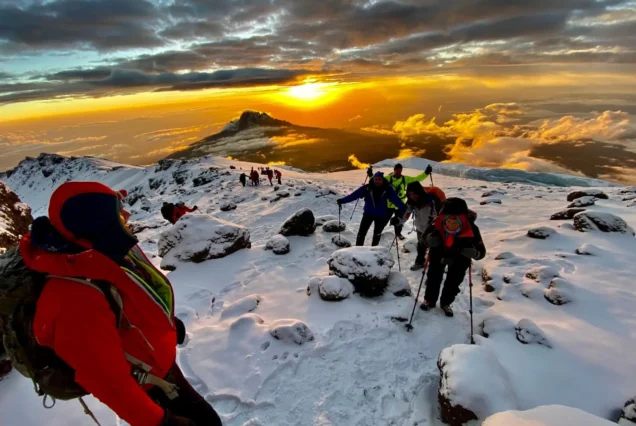
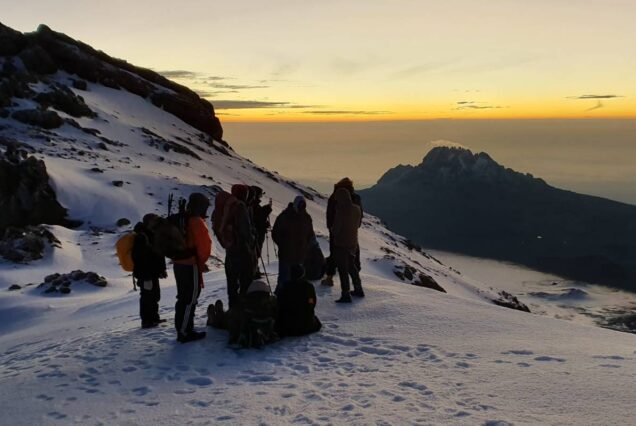
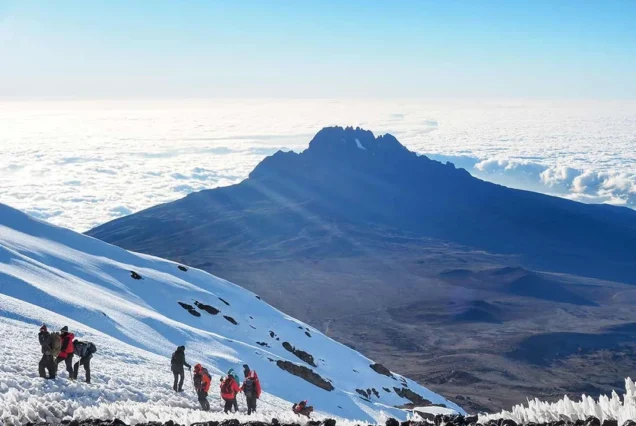
You leave the glades of the rainforest and follow an ascending path on the open moorlands to the Horombo encampment. Views of Mawenzi and the summit of Kibo are amazing. Look for giant lobelias and groundsels. You may begin to feel the effects of the altitude.
-- Elevation: 2700m/8875ft to 3700m/12,200ft
-- Distance: 12km/7.5mi
-- Hiking Time: 5-6 hours
-- Habitat: Heathland
Meals included: Breakfast, Lunch, Dinner
Budget Accommodations: Horombo Hut
Day 3:
Rest Day at Horombo Hut
Rest day at Horombo Hut with an optional hike by Mawenzi Peak.
Meals included: Breakfast, Lunch, Dinner
Budget Accommodations: Horombo Hut
Day 4:
Hike Horombo Hut to Kibo Hut
Ascending, we now pass the last watering point, walking onto the saddle of Kilimanjaro between the peaks of Kibo and Mawenzi. Vegetation begins with upper heathland but then disappears into a "moonscape". Dinner, rest and prepare for the summit climb.
-- Elevation: 3700m/12,200ft to 4700m/15,500ft
-- Distance: 9km/5.5mi
-- Hiking Time: 5-6 hours
-- Habitat: Alpine Desert
Meals included: Breakfast, Lunch, Dinner
Budget Accommodations: Kibo Hut
Day 5:
Hike Kibo Hut to Summit, and down to Horombo Hut
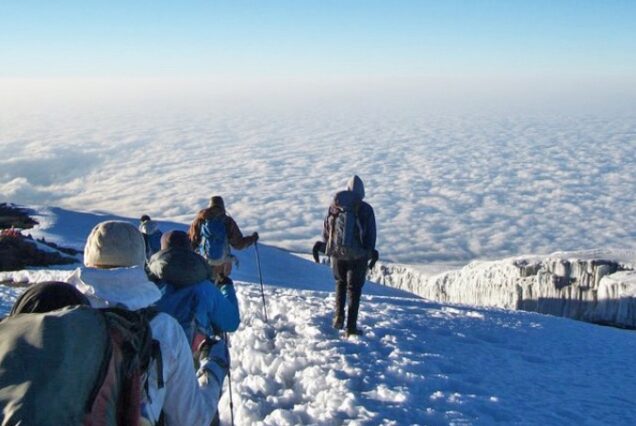
Very early in the morning (midnight to 2am), commence the climb to the summit on steep and heavy scree or snow up to Gilman's Point located on the crater rim. Continuing, we now ascend to Uhuru Peak, which is the highest point in Africa. There are unbelievable views at every turn. Have your picture taken at the summit to show your friends and family. From here we descend, stopping for lunch and a rest at Kibo before continuing to the Horombo encampment. The beginning of this climb is done in the dark and requires headlamps or flashlights. It will be very cold until you start descending, so you will need all of your warm layers. This is by far the most difficult part of the trek with many switchbacks. Going slowly "pole pole" and an optimistic attitude will get you there!
-- Elevation: 4700m/15,500ft to 5895m/19,340ft
-- Down to 3700m/12,200ft
-- Distance: 6km/4mi up / 15km/9mi down
-- Hiking Time: 6-8 hours up / 15km/9mi down
-- Habitat: Alpine Desert
Meals included: Breakfast, Lunch, Dinner
Budget Accommodations: Horombo Hut
Day 6:
Hike Horombo Hut to trail head, drive to Moshi town or Arusha city
After breakfast, a steady descent takes us down through moorland to the Mandara Hut. Continue descending through a lush forest path to the National Park gate at Marangu. At lower elevations, it can be wet and muddy. Gaiters and trekking poles will help. Shorts and T-shirts will probably be plenty to wear (keep rain gear and warmer clothing handy). A vehicle will meet you at Marangu village to drive you back to your hotel in Moshi (about 1 hour). Don't forget to tip your guides and porters. It is time for celebration!
-- Elevation: 3700m/12,200ft to 1700m/5500ft
-- Distance: 20km/12.5mi
-- Hiking Time: 4-5 hours
-- Habitat: Forest
Meals included: Breakfast, Lunch
Mid-Range Accommodations: Hotel or Lodge
Tour Map
Be the first to review “6-Day Marangu Route Kilimanjaro Trek: Full Itinerary” Cancel reply
From
$ 2,285
Enquiry Form
Where to Stay During Your Safari
Explore by Types of Stays | Accommodations
Tanzania has many kinds of beautiful and small-scale accommodations located in the best spots in the middle of nature. Hospitable with good service and of high quality. Every accommodation in Tanzania has been visited by us and carefully selected. We check whether they meet the high sustainability requirements we set.




- © 2025 Ascnzen Safaris | All Rights Reserved.
Reviews
There are no reviews yet.